
Permcath (Dialysis Catheter) Insertion for Hemodialysis
Permcath (Tunneled Dialysis Catheter) for Hemodialysis
A Permcath is a tunneled dialysis catheter placed into a large vein (usually in the neck) to provide reliable vascular access for hemodialysis. It is often used when dialysis is needed urgently, when an AV fistula is not yet ready, or when other access options are not possible.
The catheter is placed under ultrasound and fluoroscopy guidance for safety and accurate tip positioning, helping reduce complications and ensure good flow during dialysis sessions.
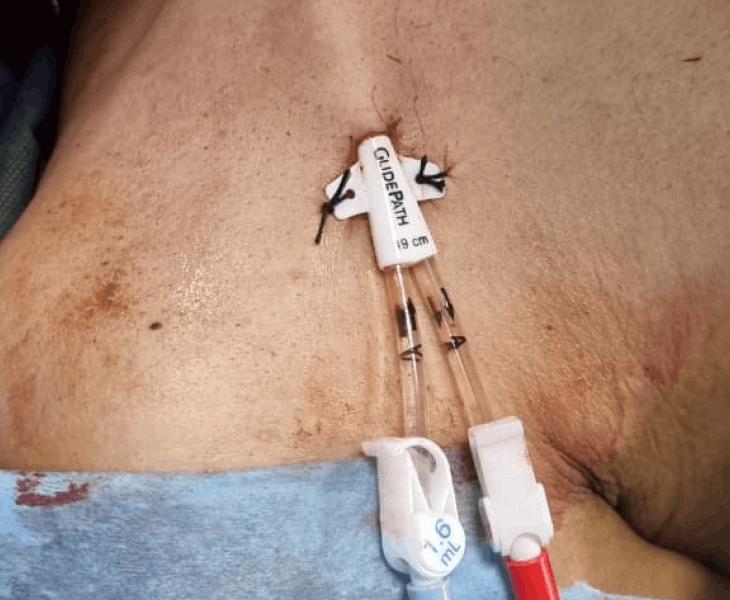
When Is a Permcath Needed?
Permcath insertion is usually recommended when a patient needs hemodialysis access for weeks to months, especially when a fistula/graft is not available or is still maturing.
Compared to temporary catheters, tunneled catheters are designed for longer use, better stability and lower infection risk when maintained correctly.
Common Indications
- Urgent need for dialysis (bridging access)
- AV fistula created but not ready for use
- Failed fistula/graft or exhausted access sites
- Patients not suitable for fistula due to vascular disease or other medical conditions
- Need for reliable access for frequent dialysis sessions
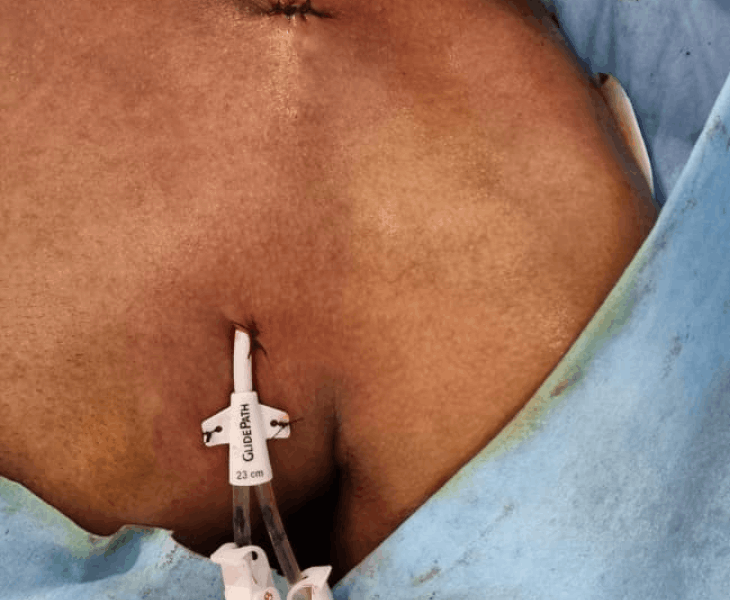
Procedure (Ultrasound & Fluoroscopy Guided)
The catheter is placed in a sterile environment under local anesthesia with sedation when required.
- Ultrasound‑guided vein puncture (usually internal jugular vein) to reduce complications.
- Tunnel creation under the skin so the catheter exit site is away from the neck puncture.
- Fluoroscopy guidance to position the catheter tip accurately in the central vein.
- Flow check to confirm both lumens function well for dialysis.
After placement, a chest X‑ray may be used to confirm position and rule out complications.
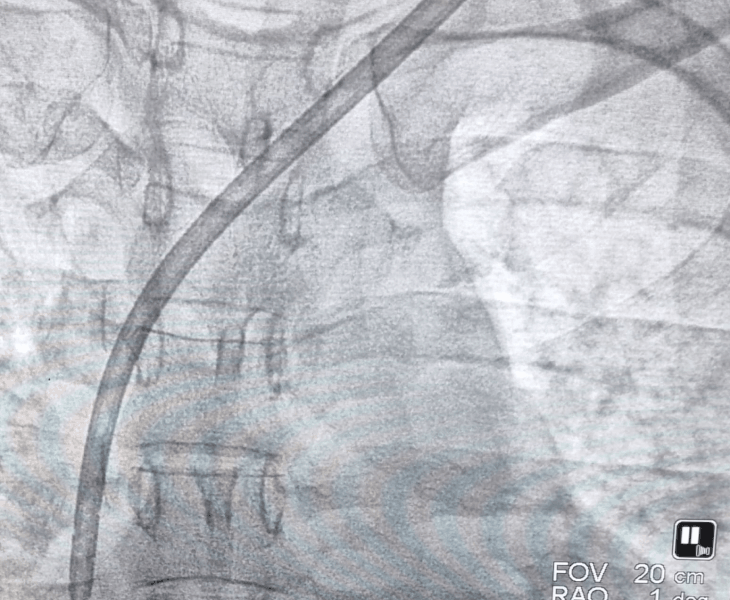
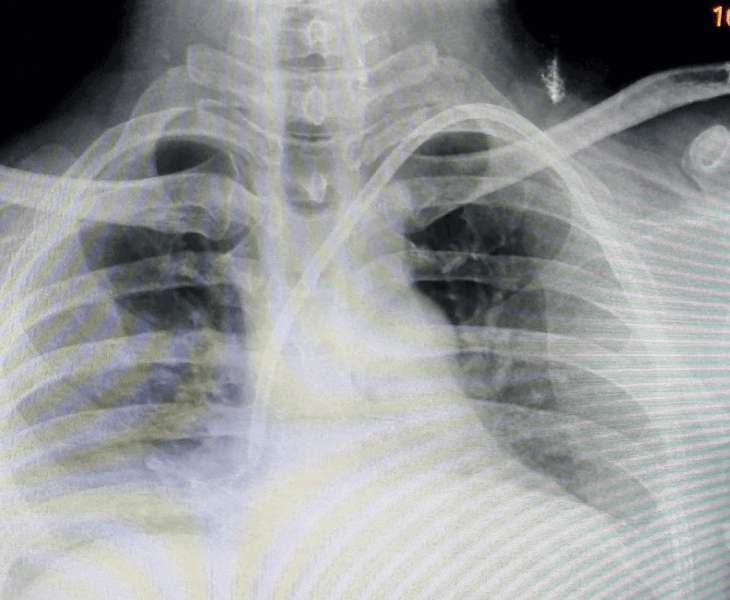
Perm cath insertion
After Care
Good catheter care is essential to reduce infection and keep dialysis running smoothly.
- Keep the dressing clean and dry; follow your dialysis unit’s dressing schedule
- Avoid pulling or twisting the catheter
- Do not allow the catheter to get soaked in water (avoid swimming)
- Report fever, chills, redness, swelling or discharge around the exit site
- Report poor dialysis flow or alarms during dialysis sessions
Frequently Asked Questions
-
1.Is permcath insertion a major surgery?
No. It is a minimally invasive procedure done through a small puncture and a short tunnel under the skin, usually under local anesthesia with sedation as needed.
-
2.How long can a permcath stay?
A tunneled dialysis catheter is intended for longer use than temporary catheters. With good care and regular monitoring, it can function for months. Your doctor will advise replacement or removal when a fistula/graft is ready.
-
3.What are the risks?
Possible risks include bleeding, infection, catheter blockage, malposition, and rarely lung complications (pneumothorax). Using ultrasound and fluoroscopy guidance helps minimise these risks.
-
4.Can I shower with a permcath?
Showering may be allowed with proper waterproof protection as advised by your dialysis unit. Avoid soaking the site in water and keep the dressing dry.
-
5.How do I know if the catheter is infected?
Warning signs include fever, chills during dialysis, redness, swelling, pain or discharge at the exit site. Seek medical care promptly if any of these occur.
-
6.When will the catheter be removed?
The catheter is removed once you have a reliable long‑term access (like an AV fistula or graft) that is functioning well, or when dialysis is no longer required.