
Ethanol & Microwave Ablation for Thyroid Nodules
Ethanol & Microwave Ablation for Large Solid and Cystic Thyroid Nodules
Many thyroid nodules are benign but can still cause visible neck swelling, discomfort, pressure while swallowing, or anxiety due to growth. Traditionally, surgery was the main option for large nodules, but many patients prefer a scar‑sparing, minimally invasive alternative.
Ethanol ablation and microwave ablation are image‑guided procedures performed under ultrasound guidance to shrink cystic and solid benign thyroid nodules, relieve symptoms and improve appearance—typically as day‑care treatment.
Who Is This For?
These treatments are mainly used for benign thyroid nodules—especially large cystic nodules (fluid‑filled), mixed solid‑cystic nodules, or selected solid nodules causing symptoms or cosmetic concerns.
Before ablation, we confirm the nature of the nodule with ultrasound and FNAC/biopsy as required. A personalised plan is then chosen—ethanol ablation for cystic components and microwave ablation for solid components.
Common Symptoms
Benign thyroid nodules may cause:
- Visible swelling/lump in the neck
- Pressure or discomfort while swallowing
- Foreign‑body sensation or neck tightness
- Cosmetic concerns due to increasing size
- Recurrent fluid collection in cystic nodules
Treatment Steps
Depending on the nodule type, treatment may be done in stages under ultrasound guidance:
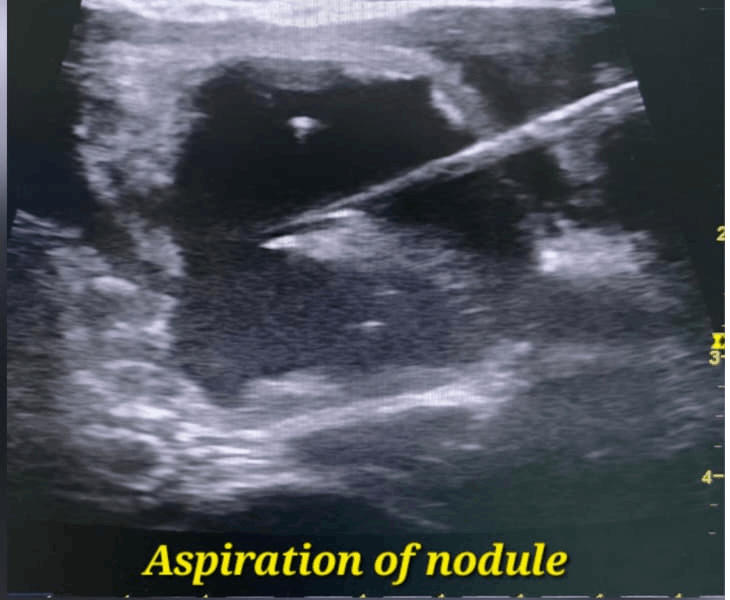
- Aspiration of nodule: fluid is removed from cystic nodules to reduce size and relieve pressure.
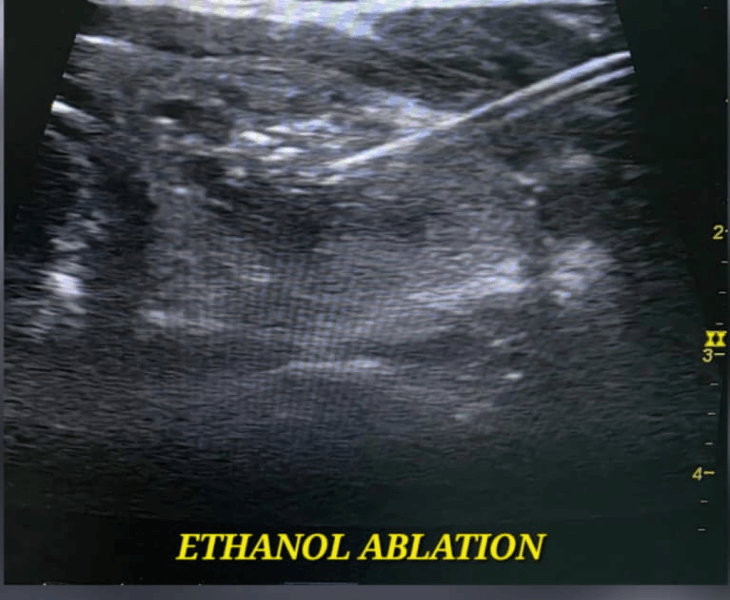
- Ethanol ablation: ethanol is injected into the cyst wall to stop re‑accumulation of fluid.
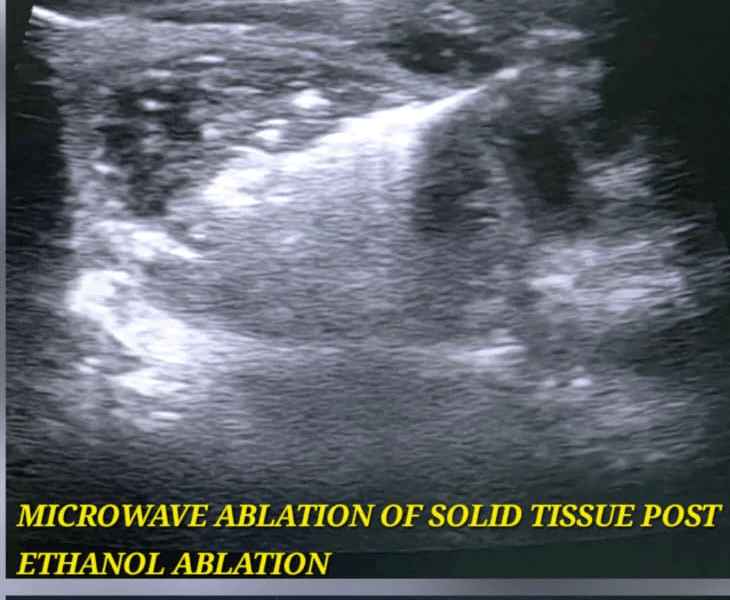
- Microwave ablation: for solid tissue (or residual solid component), a thin microwave probe is used to ablate the nodule from within, leading to gradual shrinkage.
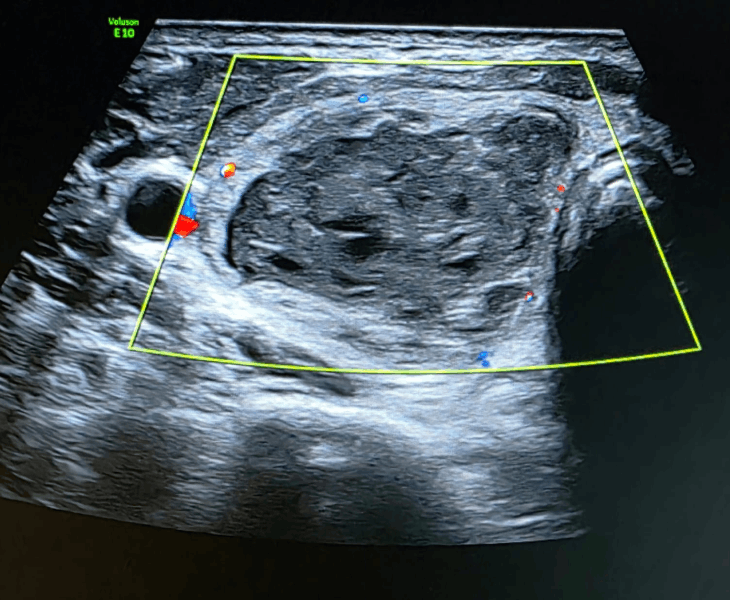
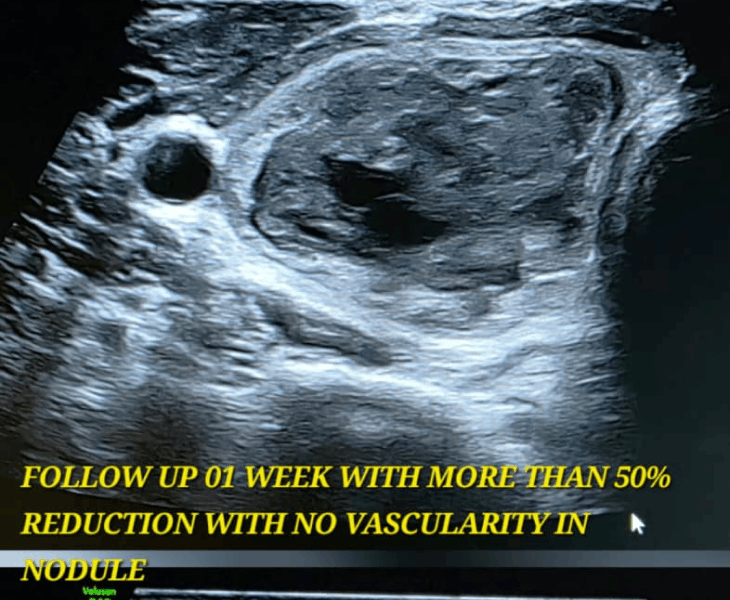
Follow‑up ultrasound typically shows reduction in size and reduced or absent vascularity within the nodule as it shrinks.
After Treatment
Most patients can go home the same day. We typically advise:
- Rest and light activity on the same day; normal routine usually from the next day
- Mild neck discomfort or swelling may occur for a short time
- Avoid heavy exercise for a short period as advised
- Follow‑up ultrasound to document shrinkage and vascularity changes
- Contact us if you notice increasing pain, fever, breathing difficulty or voice change
Frequently Asked Questions
-
1.Is this an alternative to surgery?
For selected benign nodules, yes. Ethanol and microwave ablation can reduce nodule size and symptoms without an open operation or neck scar. Your doctor will advise if ablation or surgery is better for your case.
-
2.Is FNAC/biopsy needed before ablation?
In most cases, yes. We generally confirm the nodule is benign with FNAC/biopsy (and ultrasound features) before proceeding with ablation.
-
3.How long does it take to see results?
Reduction begins early and continues gradually over weeks to months. Many patients notice visible improvement and symptom relief within the first few weeks, with further shrinkage on follow‑up scans.
-
4.Will the nodule come back?
Recurrence is less common when the appropriate technique is used (especially ethanol ablation for cystic nodules). Some nodules may need additional sessions depending on size and composition.
-
5.Are there risks?
Most patients do well. Possible risks include temporary pain or swelling, small bruising, infection, or rarely voice change due to nerve irritation. We use ultrasound guidance and careful technique to minimise complications.
-
6.Will I need thyroid medicines after ablation?
Most patients do not need new thyroid medicines solely due to ablation. If you already have a thyroid hormone problem, you may continue treatment as advised by your endocrinologist.